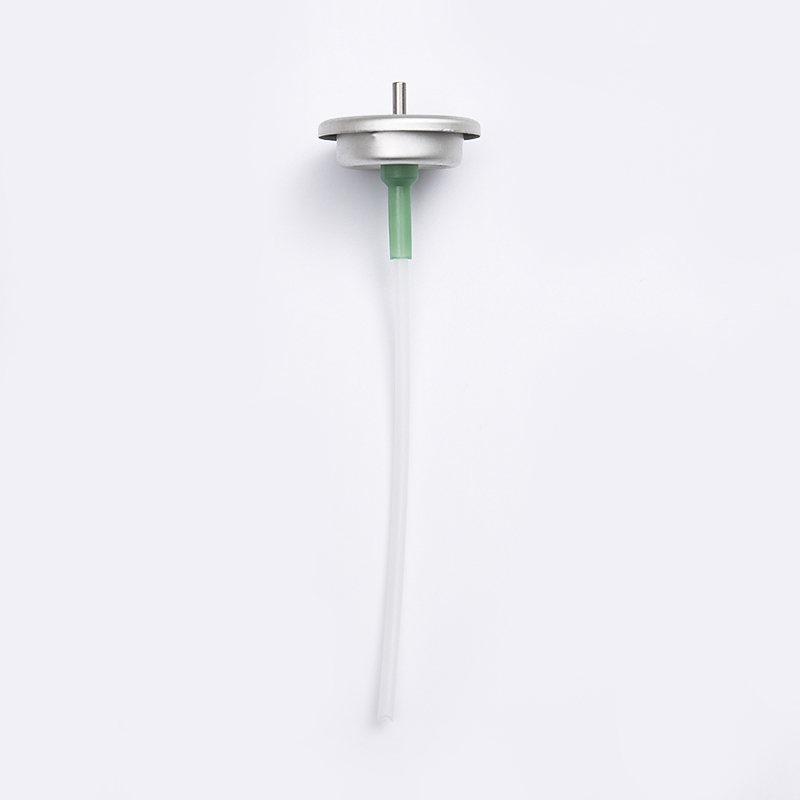
Technical Knowledge Base
Aerosol technology has become an indispensable part of modern consumer packaging and industrial applications. From personal care items like deodorants and hairsprays to household essentials like disinfectants, and even critical automotive or pharmaceutical formulations, aerosol systems provide a convenient, controlled, and efficient delivery mechanism. v a absolute heart of every aerosol container is a highly engineered, precision-matured component: the aerosol valve .
While consumers only experience the simple push of a button, the underlying mechanical operation of an aerosol valve involves a sophisticated interplay of pressure differentials, material science, and fluid dynamics. In this comprehensive technical guide, we will break down exactly what an aerosol valve is, dissect its core components, explore its operational mechanics, and look at the key types used across global industries today.
1. Understanding the Concept: What is an Aerosol Valve?
An aerosol valve is a mechanical device designed to seal an aerosol container hermetically and regulate the dispensing of its contents. Unlike traditional pump sprays that rely on physical mechanical pumping to draw liquid upward, an aerosol system is a pre-pressurized environment. The valve serves as a gatekeeper, holding back a volatile mixture of product concentrate and liquefied or compressed gas propellant.
When the valve is actuated (pressed down or tilted), it opens a clear passage. Because the internal pressure of the can is significantly higher than the externí atmospheric pressure, the product is driven violently or smoothly upward through the valve mechanism. The valve's geometry determines exactly how the product is released—whether as a fine mist, a coarse spray, a rich foam, or a steady stream.
Princip tlakového rozdílu
The entire system functions on a fundamental physics equation: ΔP = P internal − P externí . As long as P internal remains greater than P externí (atmospheric pressure), the fluid will naturally accelerate toward the exit orifice the moment the mechanical barrier of the valve is broken.
2. Anatomy of an Aerosol Valve: The Key Components
A standard aerosol valve looks compact from the outside, but it is assembled from multiple sub-components manufactured to incredibly tight tolerances (often measured in microns). A failure in any single component will result in a leaking can, a clogged system, or poor spray performance. Below are the structural pillars of a classic aerosol valve assembly:
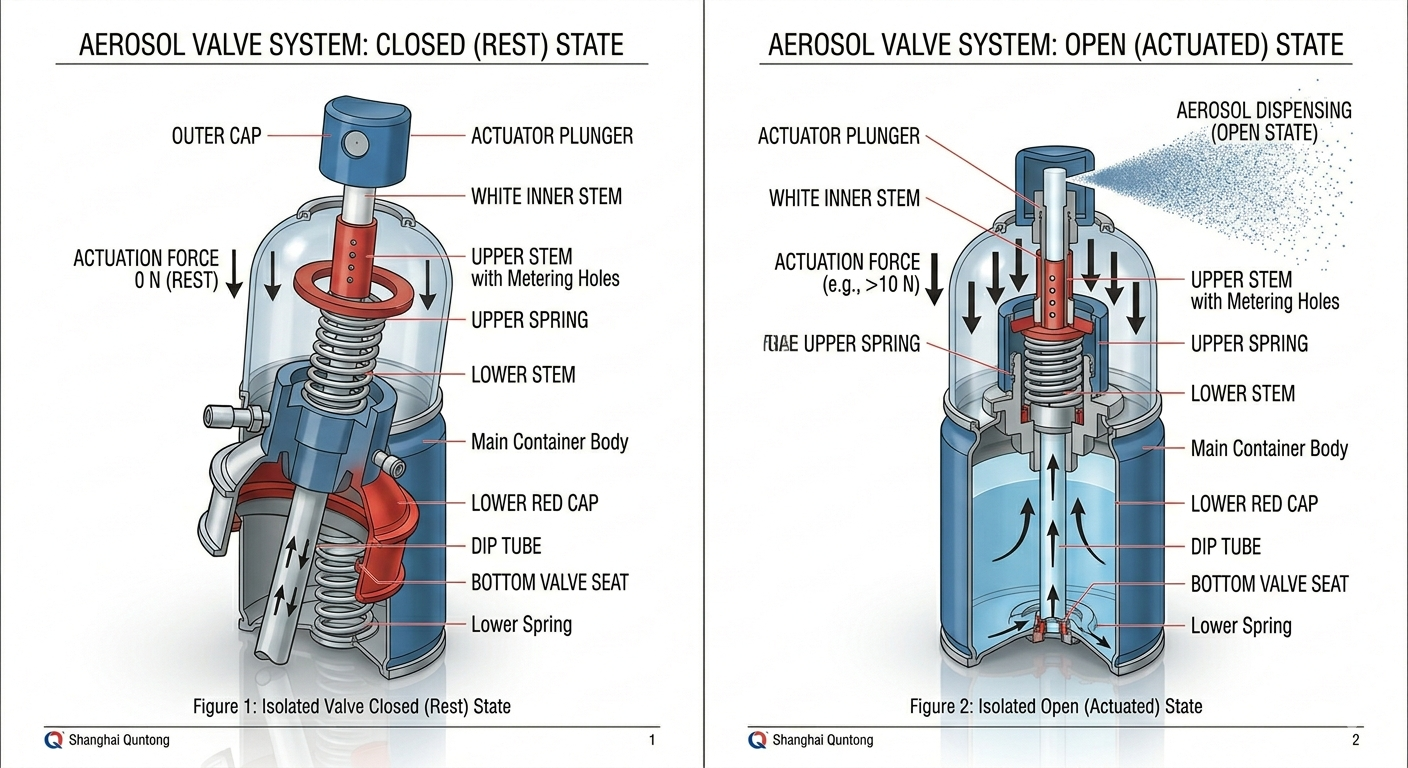
Figure 1: Cross-sectional anatomy and main components of the aerosol valve in Rest State (Closed).
| Component | Funkce a technická role |
|---|---|
| 1. Actuator (Button) | The user-facing part pressed to dispense the product. It incorporates the final exit orifice and spray inserts that break up the liquid stream into the desired spray pattern (atomization). |
| 2. Stem | Vertikální kanál, který nese pohon. It contains tiny internal orifices (metering holes) that allow the pressurized formulation to enter the stem channel from the valve body. |
| 3. Outer Gasket | A resilient elastomer ring that seals the interface between the valve stem a mounting cup, preventing any product or propellant from escaping when the valve is closed. |
| 4. Spring | Typically manufactured from stainless steel, the spring exerts constant upward force against the stem, ensuring the valve instantly snaps shut and reseals the moment the user releases the actuator. |
| 5. Housing (Valve Body) | The central chamber that encloses the spring and holds the stem. It regulates the flow rate of the product through specific bottom and side restrictions (vapor taps). |
| 6. Mounting Cup | The metal base (often tinplate or aluminum) that clinches the entire valve assembly onto the rim of the aerosol can body. It is often coated with protective lacquers to prevent corrosion. |
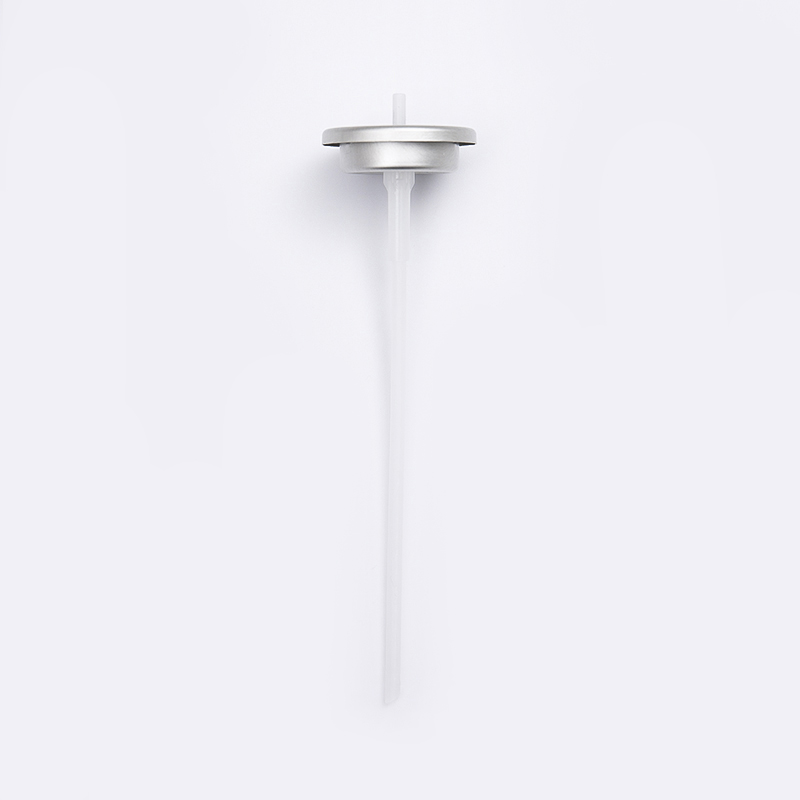
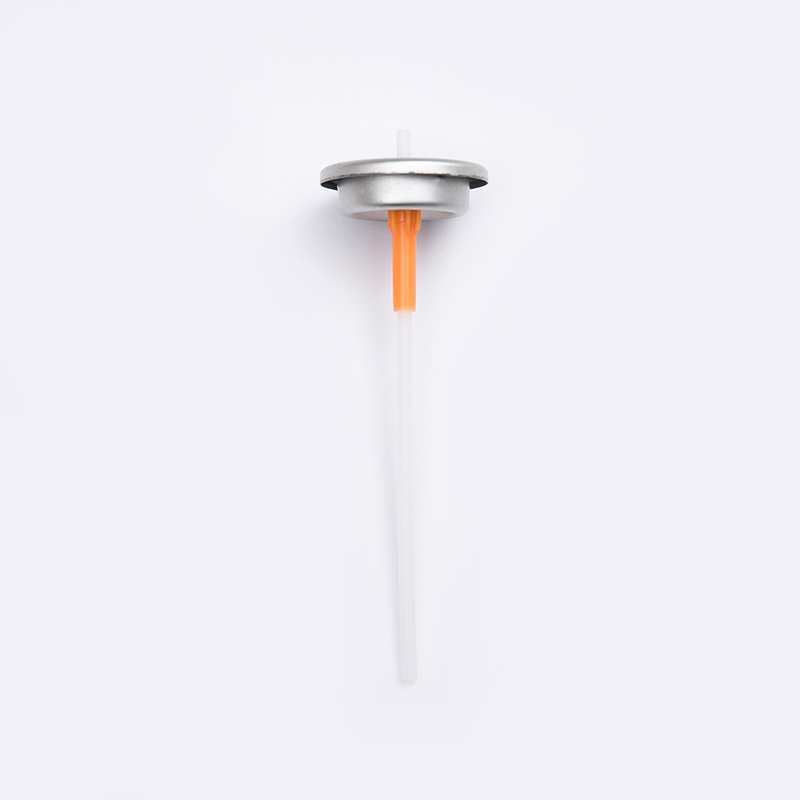
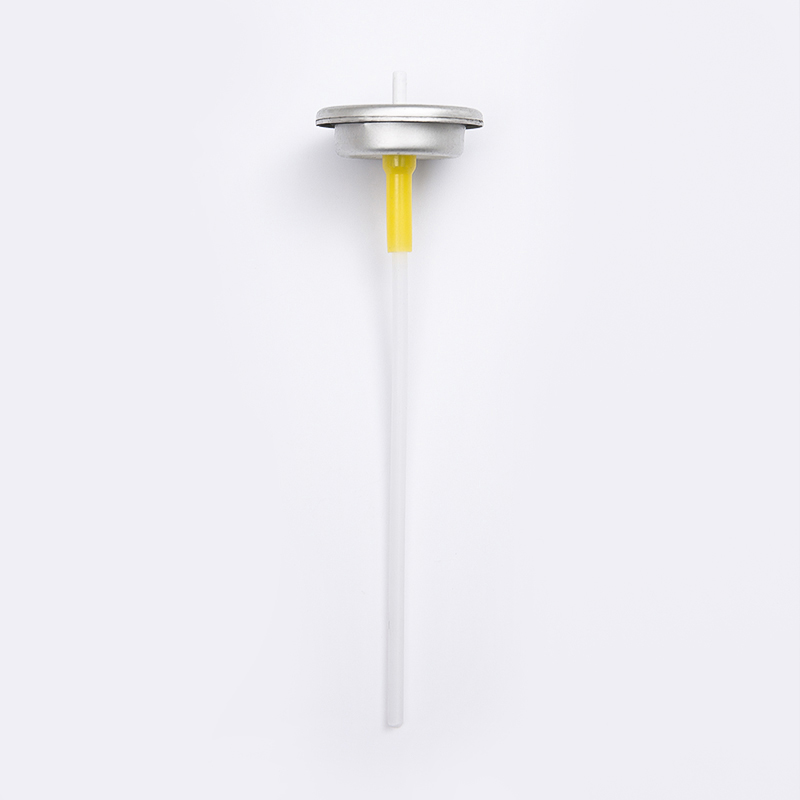
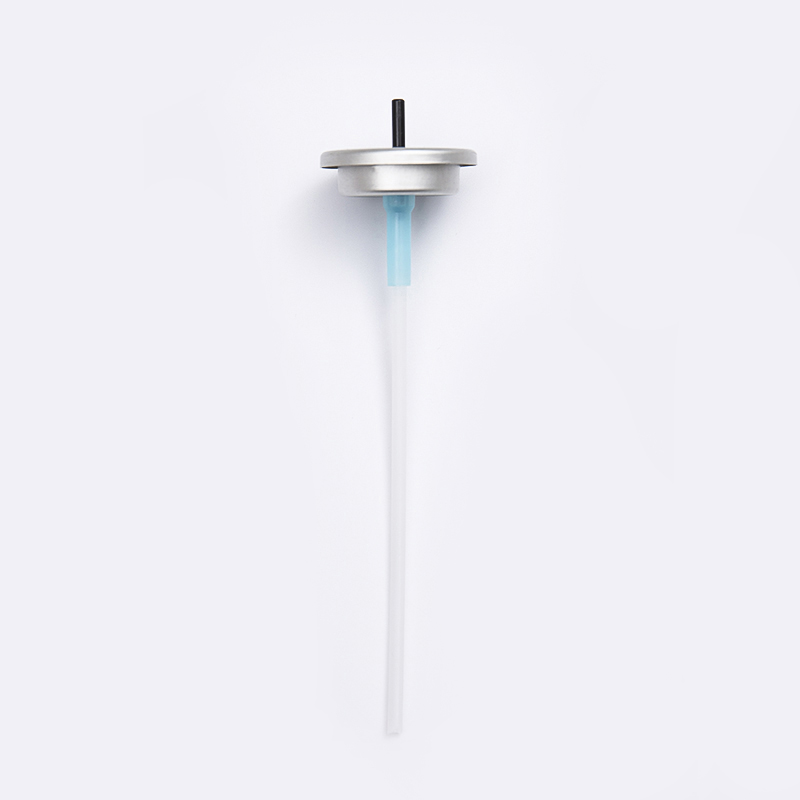
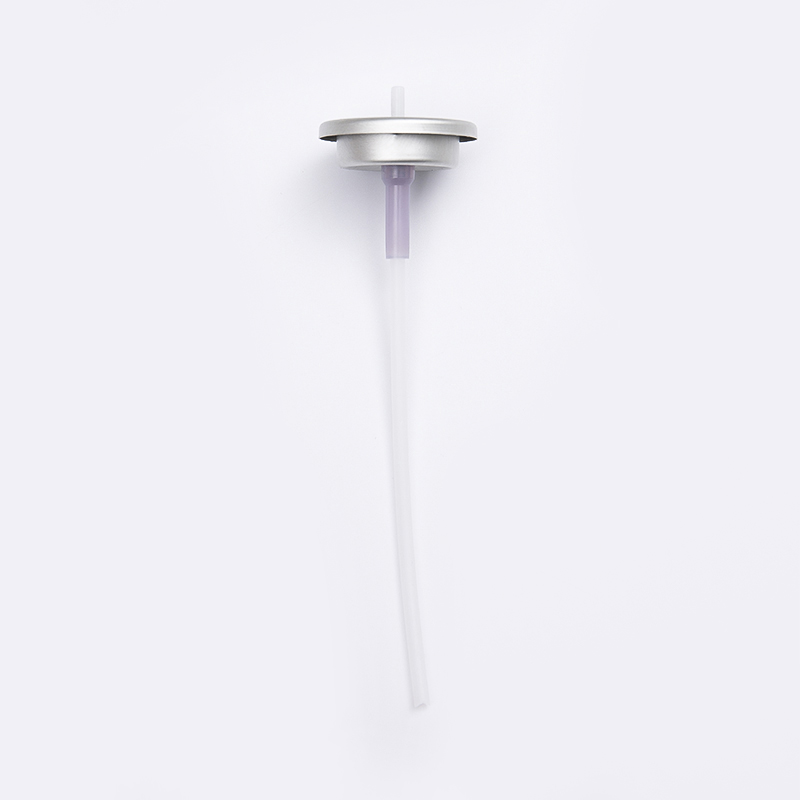
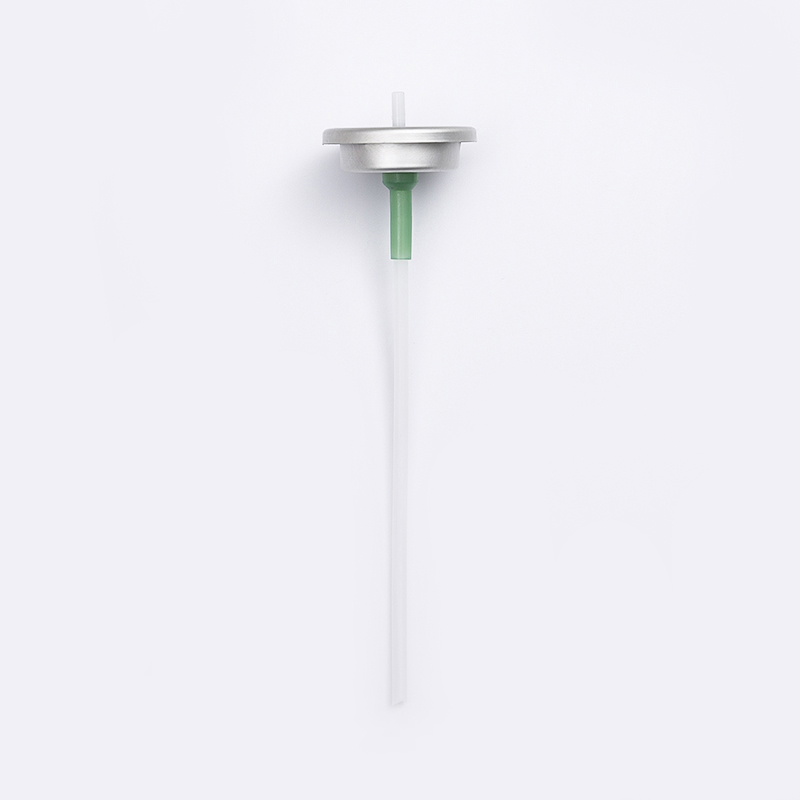
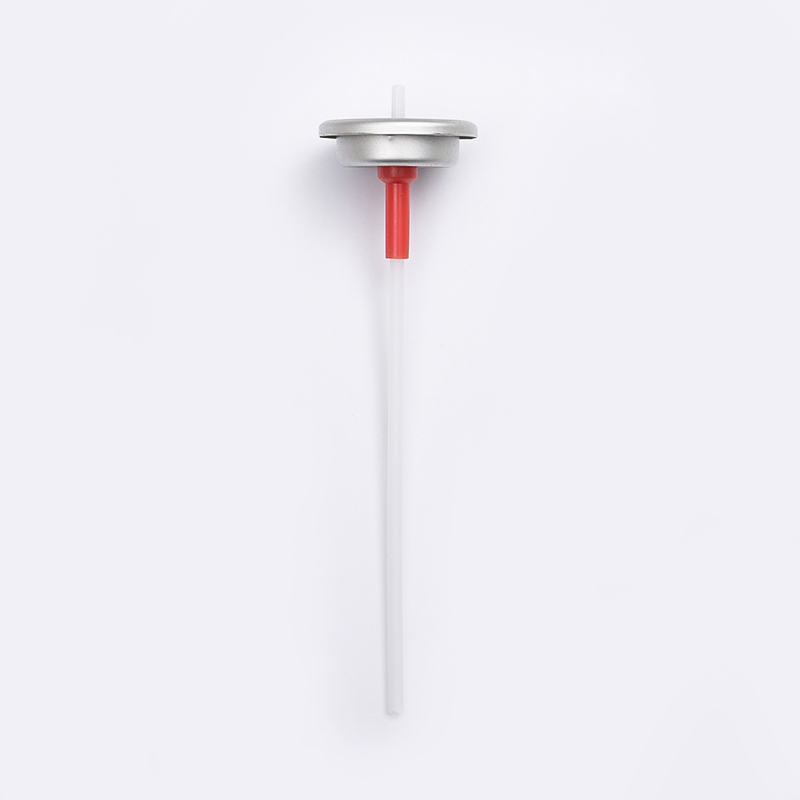
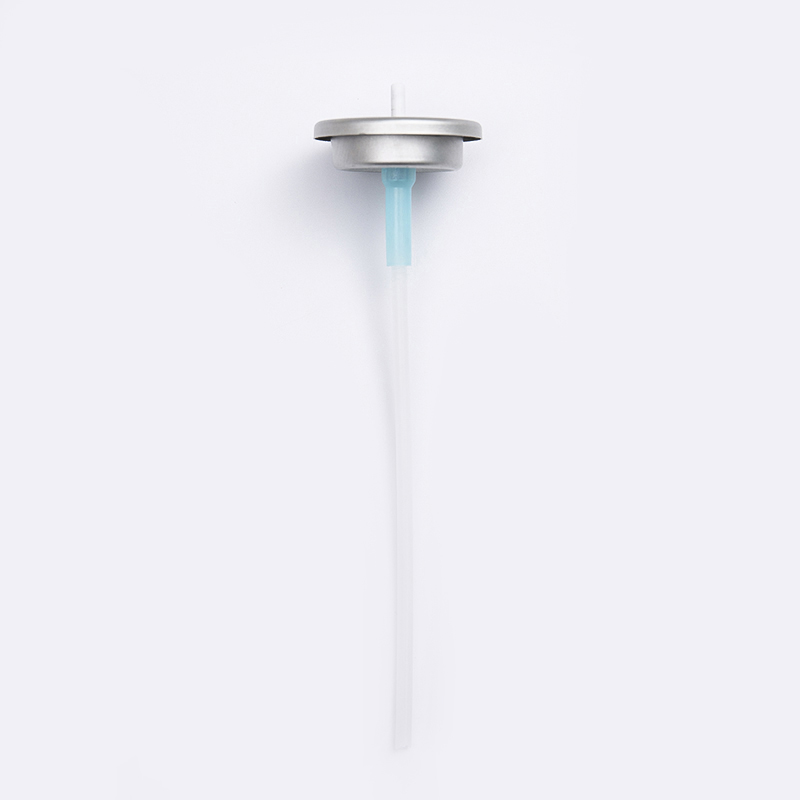
| 7. Dip Tube | A narrow plastic tube extending from the bottom of the housing to the very bottom of the aerosol can, ensuring that the liquid product concentrate is drawn up cleanly without leaving excessive residue. |
3. Mechanika krok za krokem: Jak to funguje?
To fully understand how an aerosol valve operates, we must look at the transition between its two primary states: the Klidový stav (statický) and the Actuated State (Dynamic) .
Figure 2: Dynamic operation – Actuated State (Open) demonstrating the open fluid paths and active aerosol dispensing flow.
Fáze 1: Klidový stav (uzavřený ventil)
When the aerosol can sits idle on a shelf, the internal stainless steel spring pushes the stem firmly upward. Tato akce tlačí osazení na dříku těsně proti elastomerovému vnějšímu těsnění. Crucially, the tiny metering holes (orifices) drilled into the side of the stem are positioned completely above or completely blocked by the solid body of the gasket. Because the entry holes are sealed off from the lower pressurized chamber, no formulation can escape. The container remains completely airtight and leak-proof.
Fáze 2: Aktivace (otevření ventilu)
When a user exerts downward pressure on the actuator button, they overcome the counter-force of the internal spring. Vřeteno se pohybuje dolů do komory pouzdra. This physical displacement shifts the stem's metering orifices below the gasket line, exposing them directly to the inside of the pressurized valve housing.
Mechanika proudění: Instantly, the high-pressure environment forces the liquid product up through the dip tube, into the valve housing, through the newly exposed stem orifices, and up the center of the hollow stem. It then rushes into the actuator chamber, where it is forced through a microscopic nozzle orifice into the open air.
Fáze 3: Atomizace a výstup
As the product exits the actuator orifice into atmospheric pressure, the dissolved liquefied gas propellant rapidly expands and flashes into a true gaseous state. This violent expansion shatters the liquid product stream into millions of microscopic droplets, creating a perfect, uniform aerosol mist or foam, depending on the nozzle profile design.
4. Kontinuální vs. měřené ventily
Depending on the required application, industrial valve manufacturers design systems to discharge product in two distinct ways:
- Kontinuální stříkací ventily: Toto jsou nejběžnější varianty. The product sprays uninterrupted for as long as the actuator remains depressed. They are universally preferred for products like room fresheners, spray paints, and body sprays.
- Dávkovací ventily: Primarily utilized in medical inhalers (such as asthma inhalers) or high-end perfume dispensers. Tyto ventily mají specializovanou vnitřní komoru, která izoluje přesný, předem odměřený objem přípravku (např. 50 nebo 100 mikrolitrů). Po stisknutí se vydá pouze přesně tento objem a žádný další nemůže uniknout, dokud se ventil zcela neuvolní a neresetuje.
5. Význam přizpůsobení ventilu
Neexistuje nic jako „univerzální“ aerosolový ventil. Viskozita chemického složení, povrchové napětí a výběr pohonné látky silně určují optimální specifikace ventilu. For instance, a water-based formulation requires completely different orifice dimensions and internal vapor taps compared to an alcohol- or oil-based chemical compound. Kromě toho musí být pečlivě vyhodnocen výběr elastomerních materiálů pro těsnění, aby byla zaručena chemická kompatibilita a zabránilo se bobtnání nebo degradaci materiálu v průběhu času.
At Shanghai Quntong Spray Packaging Material Co., Ltd. , specializujeme se na přizpůsobení a výrobu vysoce výkonných sestav aerosolových ventilů navržených tak, aby splňovaly přísné mezinárodní normy. By tuning orifice diameters, choosing specialized spring tensions, and utilizing robust components, we ensure your products deliver an optimized spray pattern, consistent shelf life, and flawless reliability from the first spray to the last.